Fundamentals of TIG Welding Aluminum: Everything You Need to Know
Fundamentals of TIG Welding Aluminum — Everything You Need to Know
If you’re looking for practical guidance on TIG welding aluminum, this guide treats the process as a system you can master. Everything You NEED to Know About TIG Welding turns complex AC TIG theory into clear, repeatable steps. You’ll learn how to manage the oxide layer and cleaning action, set AC balance and frequency with purpose, choose the right waveform, and control heat input for clean, consistent beads. It also covers joint preparation and fit-up, filler selection (4043 versus 5356), tungsten type and preparation, gas coverage and cup size, torch angle, travel speed, and pulse strategy. Practical troubleshooting helps you address porosity, black soot, lack of fusion, crater cracking, and distortion.
Written by an AWS-certified TIG specialist with procedures proven in aerospace, motorsport, and marine fabrication, the guidance is practical and shop-tested. You’ll find clear illustrations, parameter ranges for common thicknesses, and inspection checklists to improve first-pass results. Whether you’re setting up a new AC machine or standardizing team procedures, this guide helps speed up setup, reduce rework, and build consistent, code-conscious results on 5xxx and 6xxx aluminum from day one.
- Confidently set AC balance, frequency, and amperage for 1.5–6 mm aluminum without burn-through.
- Select the right filler and tungsten to address porosity at the source.
- Standardize fit-up, tacking, and post-weld practices for crack-resistant welds.
For more TIG welding tips please be sure to check out our blog.
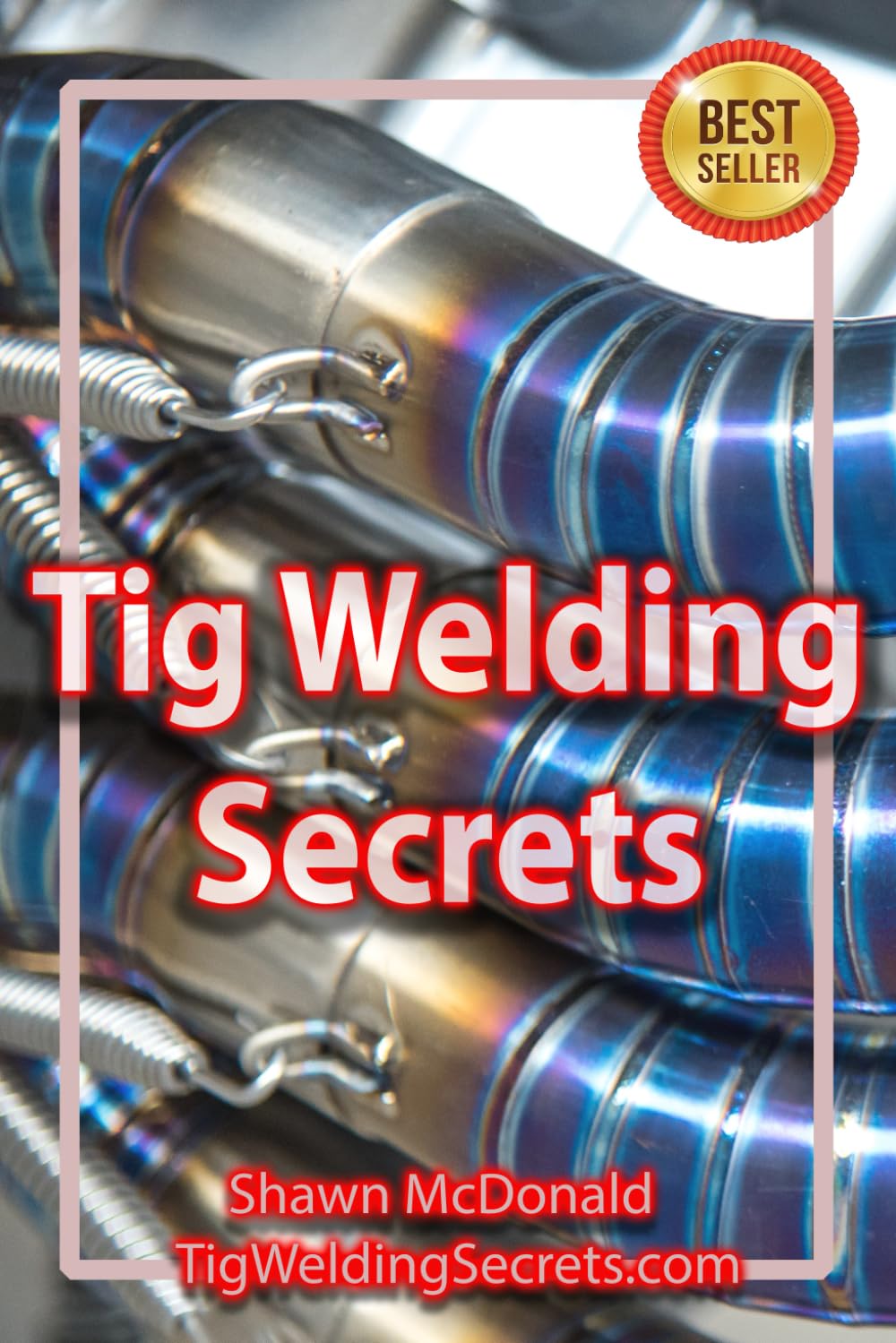
Why aluminum needs its own TIG knowledge
Most welders learn TIG on steel, where a steady DC arc and a patient hand go a long way. Aluminum breaks those habits. It pulls heat from the weld zone quickly, so a setting that works at the start of a joint may be wrong halfway along. It also has an oxide skin that melts much hotter than the metal below it, so the arc must clean before it can fuse. Aluminum offers little colour warning before it sags. Good welds depend less on a steady hand and more on understanding these physical facts and setting the machine to work with them — which is what this guide is built around.
What the guide covers about aluminum TIG
AC fundamentals
Learn why aluminum needs alternating current, what the electrode-positive and electrode-negative halves of the cycle do, and how AC balance and AC frequency change the arc — from cleaning versus penetration to a wide, soft arc versus a tight, focused cone. You’ll learn what to set for a given thickness and, more importantly, what to change when the bead is not right.
The oxide layer and cleaning
Aluminium oxide melts near 3,700 °F, while the aluminium beneath it melts around 1,200 °F. The guide explains how the AC cycle removes that oxide and how to read the frosty, etched zone that shows it is working. It also covers the pre-weld routine — a dedicated stainless brush, solvent, and no cross-contamination — that helps prevent porosity before you strike an arc.
Heat control on a heat sink
Because aluminium conducts heat away so quickly, you often need high amperage to start a puddle and then must back off as the part heats up. You’ll learn pedal technique for that ramp, pulse settings for controlling heat on thin sheet, pre-heating for heavy sections, and sequencing methods that help prevent distortion.
Tungsten and filler
Learn about tungsten types and preparation for AC on modern inverters, including why the old “always ball the tip” advice has changed. The guide also covers cup and gas-lens choices for clean coverage, plus filler selection — 4043 versus 5356 and when each is right — with rod size matched to the thickness in front of you.
Common aluminum problems and their causes
Black soot and a dull bead, porosity, crater cracking, burn-through on thin material, a wandering arc, and tungsten spitting into the puddle are each traced back to the setting or technique behind them. That helps you fix the cause instead of guessing.
Who it is for
This resource is for welders who can already run a bead on steel and now need aluminum for a project — intake piping, brackets, a boat repair, a fuel tank, or a bike frame. It puts the aluminum-specific knowledge in one place instead of scattering it across multiple videos. Basic TIG familiarity is assumed, with a focus on what changes when the metal is aluminum.
How it fits with the full guide
The aluminum material is one part of Everything You NEED to Know About TIG Welding, which also covers machine setup, tungsten and filler in general, shielding gas, torch technique, stainless steel, and fabrication workflow. If aluminum is your main reason for buying, the full guide still delivers it, while the surrounding fundamentals support the aluminum chapters. Comparing the two titles? See the TIG welding books comparison.
Keep learning
Free companion reading on this site: TIG welding thin aluminum sheet, repairing aluminum cracks with TIG, welding aluminum fuel tanks without leaks, aluminum lap-joint best practices, and what AC and DC actually do in TIG.